Most B2B companies have an Instagram account. Most of them also have the same problem: it's dead.
Not because they don't know social media matters. They do. Not because they don't have good products. They absolutely do. But because consistent social media posting is nearly impossible when you're running an actual business.
This is the story of a Berlin-based B2B packaging company, let's call them Company X.de that hadn't posted on Instagram in 72 weeks. That's over a year and four months of complete silence. Their last post sat there, lonely and outdated, while their competitors posted regularly and captured attention they couldn't.
Then they tried something different. Not another scheduling tool. Not hiring a social media manager they couldn't afford. They let an autonomous marketing agent take over completely.
Three weeks later: 21 professional posts, 4,000 views, 66 likes, and most importantly renewed confidence that social media could actually work for their B2B business.
The transformation: From 72 weeks of silence to 21 professional posts in 3 weeks
Why Traditional B2B Social Media Strategies Fail
Company X serves gastronomy businesses across Berlin and Germany. Their products: kraft paper boxes, eco-friendly bowls, custom-branded cups, sustainable packaging solutions—are exactly what modern restaurants and cafes need. Quality products. Competitive pricing. Fast delivery.
But here's what they discovered: having great products means nothing if nobody knows you exist.
"We knew social media was important," the owner told us. "We'd see competitors posting regularly, getting engagement, probably getting customers. But every time we tried, we'd post for a few weeks, then life would get busy. The account would go silent again."
This is the B2B social media trap. Unlike B2C companies with naturally photogenic products and lifestyle content, B2B companies face unique challenges:
The Content Creation Burden: B2B products don't automatically make Instagram-worthy content. A kraft box is a kraft box. How many times can you photograph it differently?
The Time Investment: Creating content, writing captions, researching hashtags, timing posts—it adds up to hours that small business owners simply don't have.
The Consistency Requirement: Instagram's algorithm punishes inconsistency. Post regularly and you get reach. Go silent for weeks and you start from zero again.
The ROI Uncertainty: Unlike paid ads with clear metrics, organic social media ROI is hard to measure. It's easy to deprioritize something when you can't see immediate returns.
Company X had tried the usual solutions. They tried to create all the content manually. They'd considered hiring a social media manager but couldn't justify €2,000+ monthly for something that might not generate leads.
So their Instagram sat dormant. 72 weeks of missed opportunities.
What Makes an Autonomous Marketing Agent Different from Traditional Tools
When Company X heard about SMARTYPANT AI, an autonomous AI marketing agents, their first reaction was skepticism. They'd seen "AI-powered" marketing tools before usually just better scheduling apps with some template suggestions.
"Will it understand our business?" they asked. "Can it really create content that looks professional and represents our brand? Or will it just spam generic posts that hurt our reputation?"
These are the right questions. Because most "AI marketing tools" are actually just automation tools wearing an AI label. They can schedule posts you create. They can't actually run your social media for you.
Here's what makes true autonomous marketing agents fundamentally different:
Brand Intelligence: Instead of templates, autonomous agents analyze your actual business. They study your website, understand your products, learn your brand colors and fonts, and create content specifically for your company; not generic content that could work for anyone.
Content Creation: They don't just schedule they create. Original posts featuring your actual products. Captions in your brand voice. Visual designs that match your aesthetic. Every post built from scratch, not from templates.
Market Awareness: Autonomous agents understand context. They adapt content for seasons, holidays, industry events, and local markets. Company X's agent automatically created content in German, targeting Berlin's gastronomy scene, highlighting sustainability trends in the packaging industry.
Continuous Operation: Unlike human marketers who work 9-5, autonomous agents work 24/7. Planning tomorrow's content, optimizing post timing, learning from performance data, improving with each post.
Strategic Thinking: They don't just post randomly. They develop content strategies, maintain posting schedules, balance product showcases with educational content, and ensure brand consistency across all posts.
But here's what sealed the deal for Company X: they saw real results from another B2B company in a similarly "boring" industry. Not hypothetical case studies—actual businesses getting actual customers through autonomous social media management.
"If it worked for packaging companies before," they reasoned, "maybe it can work for us too."
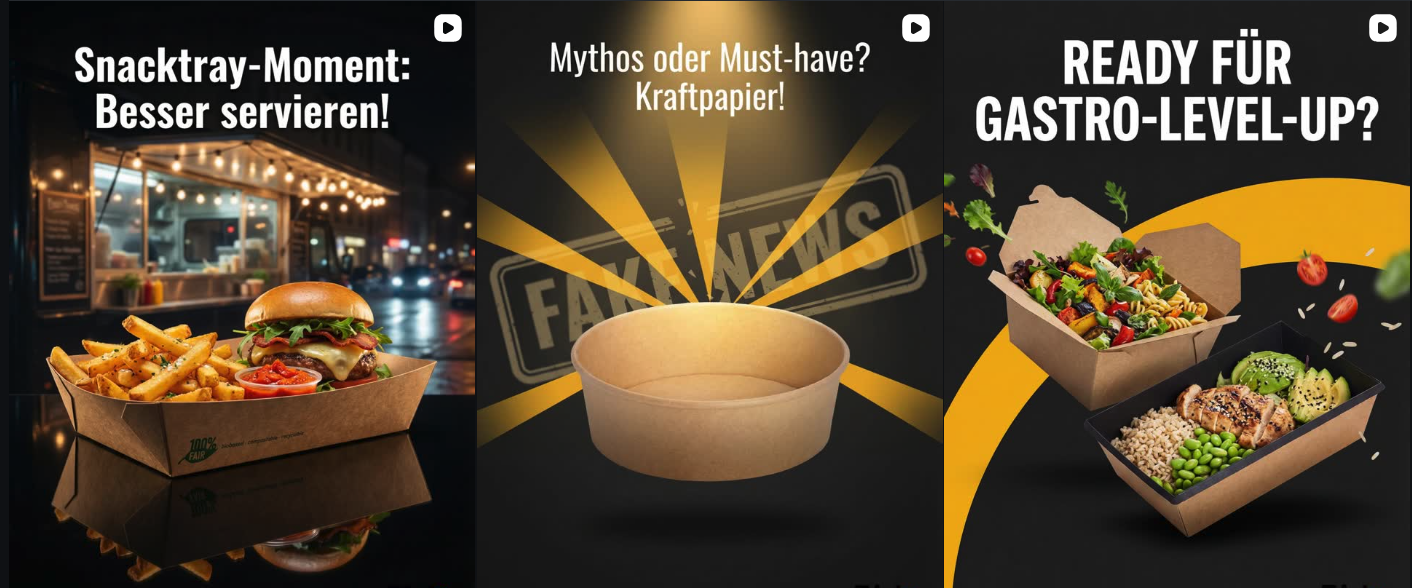
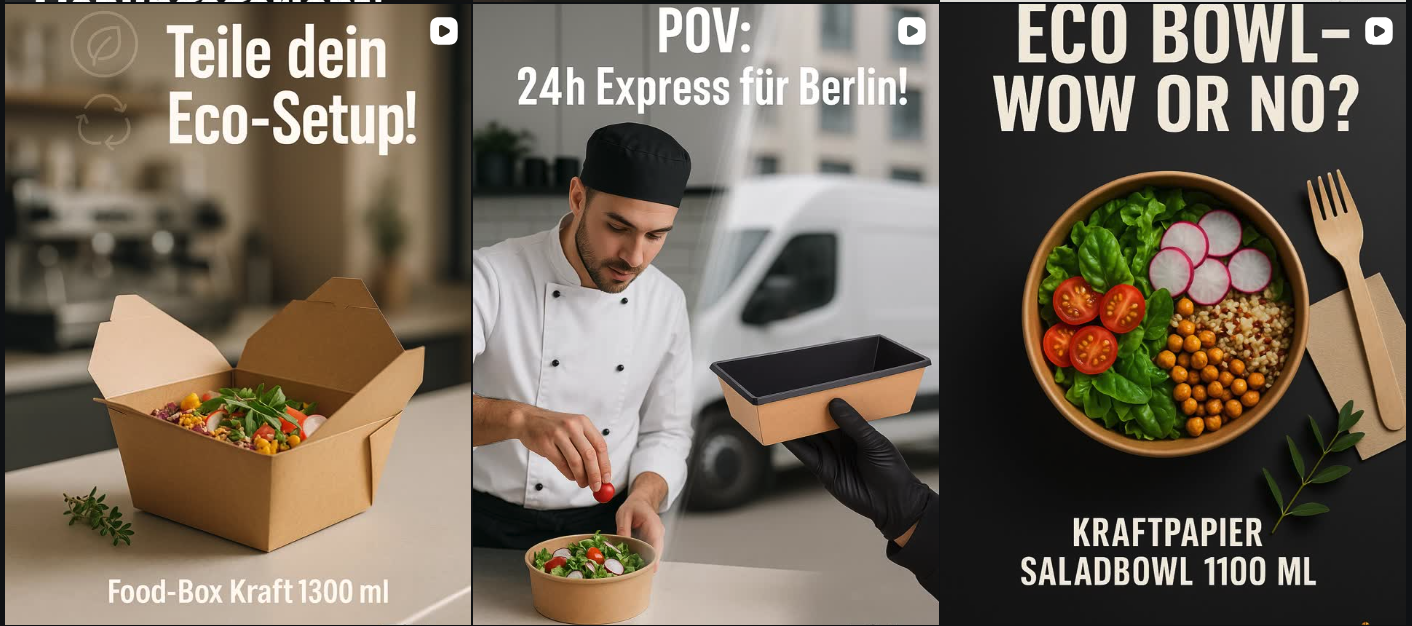
Professional posts created autonomously: product showcases, educational content, and sustainability messaging
The Three-Week Pilot: What Actually Happened
Company X started with a simple pilot: three weeks of autonomous operation. They wanted to see if SMARTYPANT could actually represent their brand professionally before committing long-term.
The setup process was straightforward. The autonomous agent analyzed their website, and the inputs like their focus, products they uploaded, understood their target market (gastronomy businesses in Berlin and Germany), and learned their brand aesthetic.
Unlike traditional social media management tools that require constant input, Company X only had to provide initial inputs. After that, the autonomous agent handled everything:
Content Planning: The agent created a weekly content calendar balancing product showcases, educational posts about sustainable packaging, behind-the-scenes content, and direct calls-to-action for consultation.
Visual Design: Every post featured Company X's actual products—kraft boxes, eco bowls, branded cups—photographed and designed professionally. Bold German headlines. Clean product shots. Consistent brand colors.
Caption Writing: Captions targeted their specific audience: restaurant owners, café managers, catering services. Direct, professional, with clear value propositions. "Snacktray-Moment: Besser servieren!" "Zero Waste? So easy geht's" "Ready für Gastro-Level-Up?"
Strategic Messaging: The agent balanced promotional content with educational value. Posts about sustainable packaging trends. Comparisons between different materials. Practical tips for gastronomy businesses.
Call-to-Action Integration: Every post included clear CTAs: "Beratung? Schreib uns eine DM!" (Consultation? Send us a DM). Making it easy for potential customers to take the next step.
The results came faster than Company X expected.
The Results: 4,000 Views from a Dead Account
After 72 weeks of complete silence, Company X's Instagram suddenly came alive. Here's what happened in just three weeks:
21 Posts Published: Consistent daily content without Company X having to create, design, or schedule anything manually.
4,000 Total Views: Compared to zero views during the 72-week dormant period. That's 4,000 potential customers who saw their products and brand.
66 Likes: Organic engagement from real accounts. Each like representing someone who actively chose to interact with their content.
Professional Brand Presence: Their Instagram went from abandoned to professional. Potential customers visiting their profile no longer saw a dead account—they saw an active, modern, trustworthy business.
But the numbers only tell part of the story. Here's what Company X learned that every B2B business needs to understand:
Consistency Matters More Than Perfection: The posts weren't always perfect. Some got more engagement than others. But showing up every day built momentum. The algorithm started showing their content to more people. Their follower count began growing organically.
B2B Products Can Work on Instagram: They worried that kraft boxes and eco bowls weren't "Instagram-worthy." But the autonomous agent proved otherwise. Professional photography, bold messaging, and educational value made even simple packaging products engaging.
Automation Doesn't Mean Generic: Every post was specific to Company X. Their products. Their brand voice. Their target market. The content felt authentic because it was built from their actual business—not from generic templates.
The ROI Becomes Visible: While Company X hasn't yet tracked direct sales from these posts, they've noticed increased website traffic. The value of social media presence became undeniable.
Why Autonomous Marketing Agents Work for B2B Companies
Company X's success isn't unique. It's repeatable. And it reveals something important about B2B social media in 2025:
The biggest barrier isn't lack of interesting products or potential customers. It's the operational burden of consistent content creation.
B2B companies face a specific set of challenges that make traditional social media strategies nearly impossible:
Limited Marketing Resources: Most B2B companies are small teams wearing multiple hats. The owner handles sales, operations, customer service, and maybe tries to squeeze in some marketing. There's no dedicated social media person.
Complex Value Propositions: B2B products aren't impulse purchases. They require education, comparison, and consideration. Creating content that communicates value without being boring or overly technical is genuinely difficult.
Longer Sales Cycles: Unlike B2C where someone might buy after seeing one post, B2B sales take time. Social media needs to build awareness and trust over weeks or months. This requires consistency that most small teams can't maintain.
ROI Measurement Challenges: It's hard to attribute a €5,000 B2B sale directly to a specific Instagram post. This makes it easy to deprioritize social media when other urgent tasks demand attention.
Autonomous marketing agents solve these problems by removing the operational burden entirely. Company X didn't have to:
- Brainstorm content ideas every day
- Photograph products and create graphics
- Write captions and research hashtags
- Schedule posts at optimal times
- Track performance and adjust strategy
All of that happened automatically. Their Instagram became an always-on marketing channel that required zero daily time investment.
The Packaging Industry's Social Media Problem (And Solution)
Let's be honest: packaging isn't sexy. Kraft boxes and eco bowls don't naturally photograph like fashion or food. This makes social media feel even more daunting for packaging companies.
But here's what Company X discovered: the packaging industry's social media problem is actually an opportunity.
Very few packaging companies do social media well. Most either don't post at all or post inconsistently with low-quality content. This means the bar is actually quite low. Consistent, professional content makes you stand out immediately.
The autonomous agent created posts that worked because they understood the audience. Restaurant owners and café managers scrolling Instagram don't want to see generic stock photos. They want to see:
Real Products in Real Contexts: Food beautifully presented in kraft boxes. Coffee served in branded cups. These aren't just packaging products—they're part of the dining experience.
Educational Value: Posts explaining sustainability benefits. Comparisons between materials. Practical tips for reducing waste. Content that makes followers smarter about their purchasing decisions.
Visual Clarity: Bold German headlines that communicate value instantly. Clean product shots that highlight quality. Professional design that builds trust.
Direct CTAs: Clear paths to consultation and purchasing. No ambiguity about what action to take next.
This approach works across the entire packaging industry—Verpackung companies in Germany, sustainable packaging providers, custom branding services. Any B2B packaging business can use autonomous marketing agents to build consistent social media presence.
Autonomous vs. Traditional B2B Social Media Management
Company X had tried other approaches before. Here's how autonomous marketing agents compared to their previous attempts:
Traditional Approach #1: DIY Manual Posting
- Time investment: 3-5 hours per week
- Results: Inconsistent posting, low-quality content, eventually abandoned
- Cost: Free but massive opportunity cost
Traditional Approach #2: Scheduling Tools (Buffer, Hootsuite)
- Time investment: Still 3-4 hours per week creating content
- Results: Better consistency but content quality remained low
- Cost: €15-30/month plus time investment
Traditional Approach #3: Freelance Social Media Manager
- Time investment: Communication and approval overhead
- Results: Professional content but expensive
- Cost: €500-2,000/month (prohibitive for most small B2B companies)
Autonomous Marketing Agent Approach:
- Time investment: Near zero after initial setup
- Results: Consistent professional content, growing engagement
- Cost: Significantly less than hiring a human marketer
The autonomous approach solved Company X's core problem: maintaining professional social media presence without requiring daily time investment or prohibitive costs.
What This Means for B2B Companies in 2025
Company X's story reveals a larger truth about B2B marketing in 2025: social media is no longer optional, but traditional social media management is no longer sustainable for small teams.
Here's what's changing:
Social Media as Search Engine: Your potential customers aren't just Googling anymore. They're searching on Instagram, checking social proof before making B2B purchasing decisions. A dormant social media presence signals an inactive or unreliable business.
AI Training Data: ChatGPT, Google's AI, and other AI assistants train on social media content. When someone asks "Who are the best eco-packaging suppliers in Berlin?" your social media presence influences whether AI recommends you.
Authenticity Matters More: B2B buyers are tired of corporate-speak. They want to see real products, real value, real businesses. Autonomous agents can maintain authenticity while ensuring consistency.
The Consistency Advantage: Most of your competitors aren't posting consistently. If they are, they're either spending significant time or money. Autonomous agents let you match or exceed their consistency without matching their resource investment.
For B2B companies, the question is no longer "Should we do social media?" It's "How can we do social media sustainably?"
Autonomous marketing agents provide the answer: consistent, professional, brand-specific content without requiring daily time investment.
The Repeatability Factor: Why This Matters
Company X isn't the first packaging company to see results from autonomous marketing agents. And they won't be the last.
This is important because it proves these results aren't flukes. They're repeatable patterns that work across B2B industries:
Packaging companies generating leads from Instagram. B2B businesses building brand awareness. Professional services attracting qualified prospects. All through consistent, autonomous social media management.
The pattern is clear: when B2B companies remove the operational burden of content creation, social media becomes a reliable marketing channel instead of an aspirational goal they never achieve.
What Happens Next for Company X
After three weeks, Company X decided to continue with autonomous social media management. But they're not stopping at Instagram.
The plan: expand to Google Business, YouTube Shorts, and Facebook. The same autonomous agent that revived their Instagram will manage all these platforms simultaneously, creating platform-specific content without requiring additional time investment from Company X.
This is the real power of autonomous marketing agents: scalability. Adding platforms doesn't add proportional work. The same agent handles everything, maintaining consistency across all channels.
"We've proven it works on Instagram," Company X told us. "Now we want to be visible everywhere our customers are looking."
The Bottom Line: Autonomous Marketing Agents for B2B
Company X's Instagram went from 72 weeks of silence to 4,000 views in three weeks. That's the quantifiable result.
But the real story is what happens when you remove the biggest barrier to B2B social media success: the operational burden of consistent content creation.
For B2B companies wondering if autonomous marketing agents are right for them, Company X proves three critical points:
It works for "boring" industries: If packaging can generate 4,000 views, your industry can too.
It requires minimal time investment: After setup, daily operations are fully autonomous.
It delivers professional results: The content represents your brand well, not generic AI spam.
The era of choosing between "spend thousands on a social media manager" or "give up on social media entirely" is over. Autonomous marketing agents provide a third option: professional, consistent, brand-specific social media management that runs itself.
Company X's dead Instagram is now alive. And for B2B companies everywhere facing the same struggle, that possibility is now proven and repeatable.
What Is an Autonomous Marketing Agent? (FAQ)
Q: What's the difference between an autonomous marketing agent and social media scheduling tools?
A: Scheduling tools help you post content you create manually. Autonomous marketing agents actually create the content for you—images, captions, strategies—and post it. Think of it as the difference between a calendar (scheduling tool) and a full-time marketing employee (autonomous agent).
Q: Can autonomous agents really understand B2B businesses?
A: Yes. They analyze your website, products, target market, and brand to create specific content for your business. Company X's agent understood they target German gastronomy businesses, emphasized sustainability, and created content accordingly.
Q: Will autonomous content look generic or spammy?
A: Not if done correctly. Company X's posts featured their actual products, used their brand colors, and communicated in their voice. The key is that autonomous agents build content from your specific business, not from generic templates.
Q: How much time does autonomous social media management require?
A: Minimal. After initial setup (providing access and approving strategy), daily operations require zero time investment. The agent handles planning, creation, and posting automatically.
Q: Is autonomous marketing suitable for all B2B industries?
A: It works best for businesses with visual products or services. Packaging, manufacturing, professional services, hospitality suppliers, retail equipment—any B2B industry that can showcase products or educational content visually.
Q: How does autonomous marketing help with AI search visibility?
A: AI assistants like ChatGPT train on publicly available content including social media. Consistent multi-platform presence increases the likelihood that AI recommends your business when asked about your industry or location.
Q: What happens if I want to make changes or have control?
A: Good autonomous systems allow oversight. You can review content before it posts, make modifications, or let it run fully automatically. The choice is yours.
For B2B companies tired of watching competitors succeed on social media while their own accounts sit dormant, autonomous marketing agents offer a proven solution: professional, consistent content without the time investment that makes social media impossible for small teams.