€6,000 in B2B Leads, 2× Website Traffic through Social Media
Most B2B owners don't think social media can bring real leads. We ran the analytics for a packaging company. Here is what actually happened over five weeks.
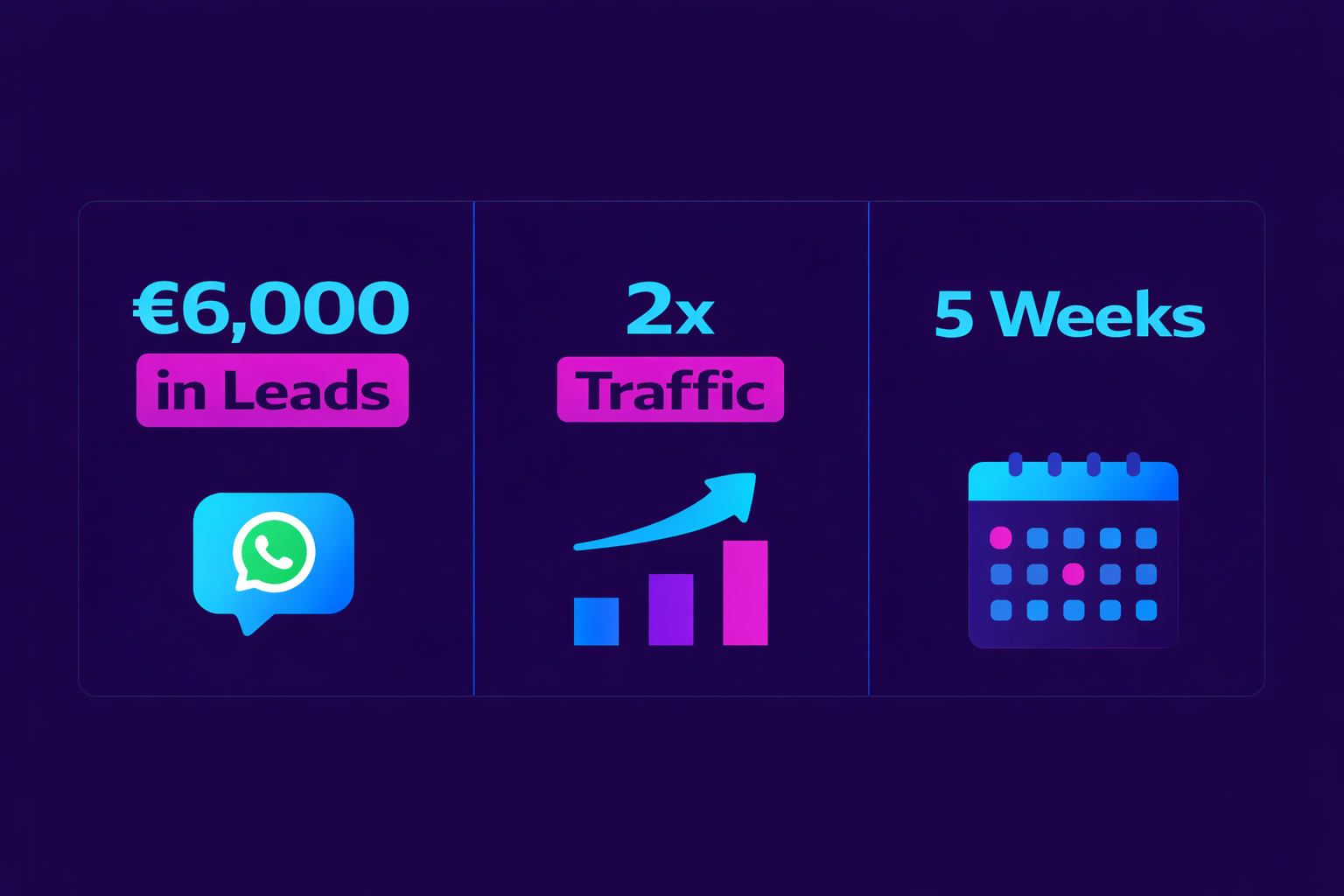
The results
Five weeks of autonomous posting, 11 November to 15 December 2025, across Instagram, YouTube and Facebook:
Alongside those: 24 visits arriving directly from social media, accounting for 18% of all traffic. 20 visits to the custom packaging product page, with an average of 1m 29s spent there. Roughly 10,000 views across the three platforms.
This is not social media engagement data. This is Google Analytics showing actual website behaviour — visitors landing on product pages, spending real time there, and converting to business inquiries.
What they did
Nothing Verpackung is a German B2B packaging company supplying gastronomy businesses — restaurants, cafés, catering services. Typical B2B customers: long sales cycles, high order values.
Instead of posting manually or hiring a social media manager, they let the system handle everything. No daily content creation, no scheduling, no management overhead. For five weeks it ran on autopilot.
The data, before and after
Before — 1 October to 10 November:
- 64 website visits
- 17 seconds average time per visit
- 34 visits to the homepage, ~19s average
- Custom packaging landing page: minimal traffic
After — 11 November to 15 December:
- 130 website visits (2×)
- 48 seconds average time per visit (3× longer)
- 24 visits directly attributed to social media
- 68 visits to the homepage (doubled), 1m 00s average
- 20 visits to the custom packaging page, 1m 29s average — it became the #2 entry page
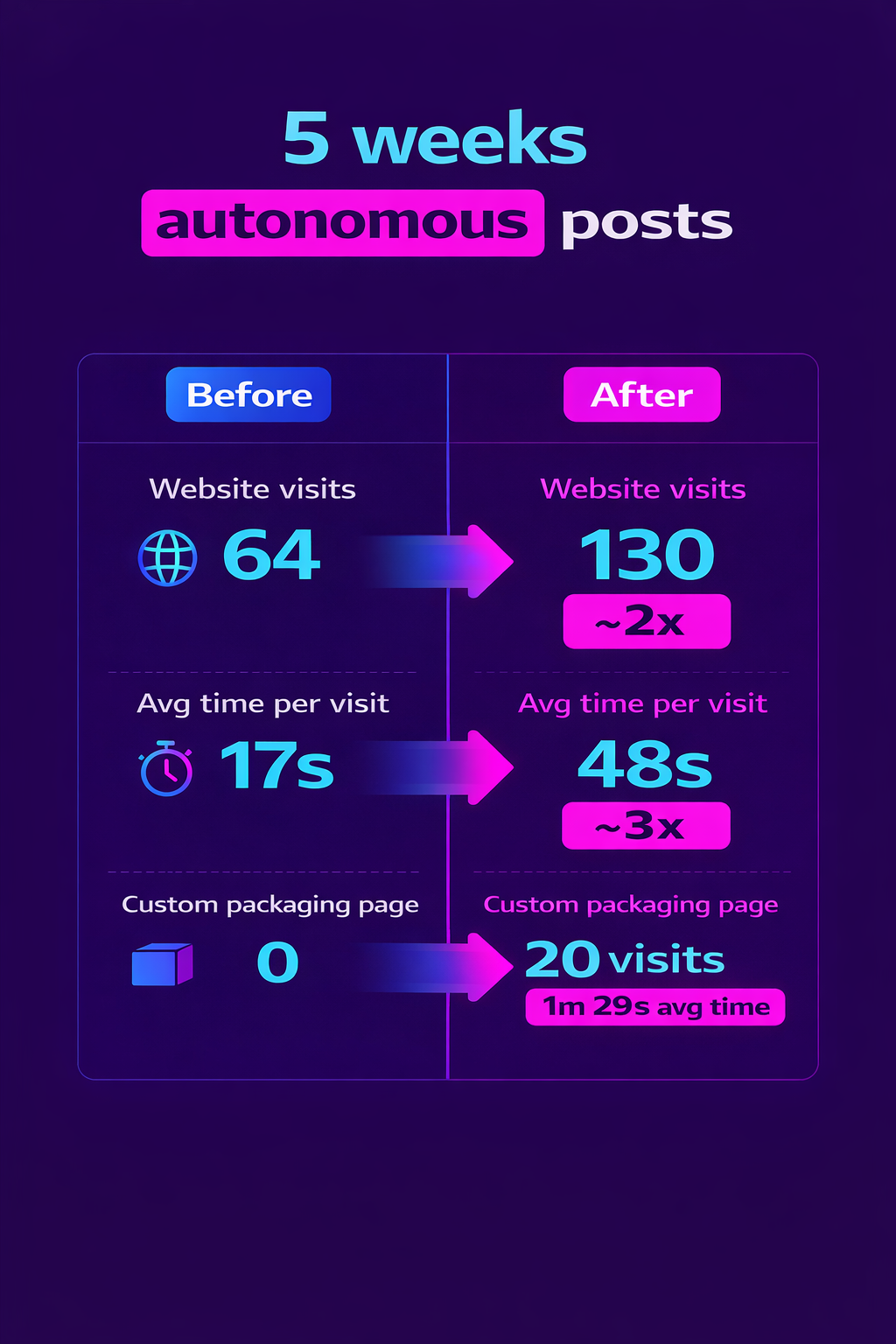
The custom packaging landing page — the one designed to convert B2B customers — went from almost no traffic to the second most common entry point. Visitors who landed there spent an average of a minute and a half reading about products and services.
That is not accidental traffic. That is qualified, high-intent visitors.
What this proves
Autonomous posting drives real website traffic. Social media became a measurable traffic source, accounting for 18% of all visits during the test period.
High-intent visitors, not just views. The 48-second site average and the 1m 29s on the product page indicate genuine interest. These were not accidental clicks or bot traffic.
Trackable business outcomes. Within the first two weeks, the company received two inbound WhatsApp inquiries directly attributed to Instagram. For custom packaging orders, typical deal values run €1,000 to €5,000, with larger orders reaching €10,000 and above. A conservative estimate for those two leads: €6,000 in potential business.
Custom packaging for restaurants isn't inherently Instagram-friendly. Consistent, strategic posting drove qualified traffic anyway.
It works for "boring" B2B. This was not a visually exciting product. That turned out not to matter.
How it worked
The system analysed the company's website and products, then created platform-specific content across Instagram, YouTube and Facebook. Posts featured actual products — eco-friendly bowls, branded cups, paper bags — with messaging aimed at gastronomy businesses.
Content spanned product showcases, sustainability messaging, educational posts about packaging trends, and direct calls to action for consultations. Instagram routed traffic to the custom packaging landing page; YouTube and Facebook drove traffic to the homepage.
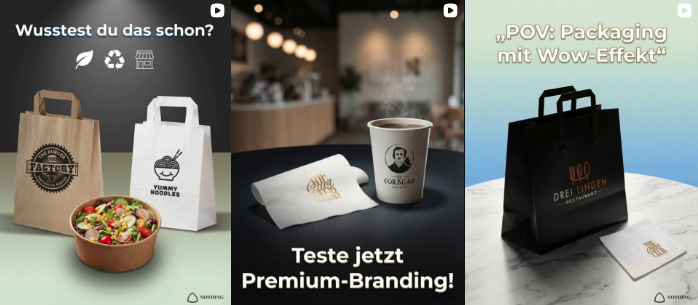
Content planning, visual creation, caption writing, posting schedules, platform optimisation — all handled. The company's involvement after setup was essentially zero.
Why this matters for B2B companies
Most B2B companies struggle with social media for the same reason: they can't maintain consistency while running the actual business. Manual posting costs hours weekly — brainstorming, creating visuals, writing captions, scheduling. Most small B2B teams don't have that time.
Hiring a social media manager costs €2,000 or more monthly, which many B2B companies can't justify without proof of return. Autonomous management removes the operational burden instead of adding to it.
The pattern
This is the second B2B packaging case study we've published. The first showed autonomous posting reviving a dormant Instagram account and generating 4,000 views. This one proves the next layer: social media doesn't just create visibility, it drives website traffic and generates leads.
Two packaging companies. Two sets of real data. Same pattern.
What industry data shows
This case study isn't an outlier. Research consistently shows B2B buyers rely on social media during purchase decisions:
- 84% of C-level and VP-level executives use social media to support purchase decisions (IDC, 2023)
- 75% of B2B buyers use social media to research vendors and products (Gartner, 2024)
- 61% of B2B marketers say social media has helped increase revenue (Content Marketing Institute, 2024)
- LinkedIn generates 80% of B2B social media leads (LinkedIn, 2024) — though Instagram and YouTube increasingly drive traffic for visual industries like packaging and manufacturing
Companies without an active presence risk being invisible during the research phase, long before a prospect ever contacts sales. What this packaging company achieved lines up with the broader pattern. The question is whether you have the operational capacity to maintain it consistently.
Frequently asked questions
How do you prove social media ROI for B2B?
Track website analytics, not social engagement. Measure traffic sources, landing page visits, time on site, and conversion events — contact forms, WhatsApp inquiries, phone calls. Google Analytics attribution shows which visits came from social and what they did next.
What's a realistic timeline for results?
This case study shows measurable results in five weeks. Most B2B companies see traffic increases within four to eight weeks of daily posting. Lead generation typically starts within two to three months as awareness builds.
Can autonomous social media work for B2B industries?
Yes — for packaging, manufacturing, and supplier businesses among others. The key is product-focused content with clear value propositions rather than lifestyle content.
How do you measure attribution accurately?
UTM parameters on social links, Google Analytics traffic source tracking, and landing page behaviour monitoring. Track which pages social visitors land on and how long they stay — high time on product pages indicates qualified interest.
Which metrics matter most?
Website traffic from social, time on site, product page visits, and conversion events. Likes and views are secondary — focus on behaviour that indicates purchase intent.
Does this work for B2B e-commerce?
Yes. B2B e-commerce benefits from consistent product showcases, educational content, and direct traffic to product pages. The system handles the operational burden while keeping the brand presence professional.
Can you track leads back to specific posts?
With proper UTM tracking and Analytics setup, yes. This case study tracked 24 visits directly from social media and attributed two WhatsApp inquiries to Instagram within the first two weeks.
See what it makes for your business.
Two sample posts and a full visibility audit. No credit card, no time limit on the free workflow.
Start free